Posts

Showing posts with the label API 7-2

Rotary Drilling Fluids - An Overview
Image
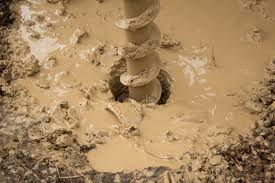
Most large holes in large quarries, open pit mines, petroleum extraction, and other industries are drilled using rotary drilling. Rotary cutting can also be used in soft rocks to drill small boreholes. For instance, small holes of 25 millimeters in coal mines are frequently drilled using rotary drilling. In soft rocks, rotary cutting is used, while rotary crushing is used in medium to hard rocks. Three-cone drill bits with numerous teeth or buttons that freely rotate like planetary gear and crush the rock as the drill bit rotates are the most common bits used in rotary crushing. The weight of the drill rig provides the downward thrust, and the drill pipe's end causes the rotation. A hydraulic or electric motor drives the rotation, typically at speeds ranging from 50 to 120 revolutions per minute. Cuttings are frequently discharged from the bottom of the hole using compressed air. The flushing of drill cuttings is correlated with the size of the gap that exists between the drill pip...
How Measurement Instruments can be Damaged?

Image
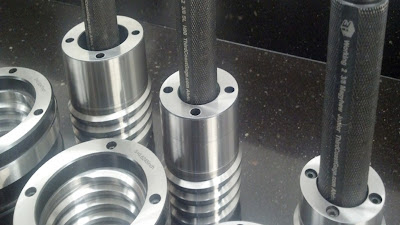
Probably the most concerning issue across the businesses is the harm of hardware. The harmed hardware can prompt the age of ill-advised items, yet on the off chance that the harm is sufficiently served, it might even prompt expanded summary time and high fix costs. Rather than cutting sensational misfortunes in both usefulness and benefits, one ought to consistently zero in on giving the staff the information on the most proficient method to deal with the bits of hardware and the meaning of leading a normal adjustment meeting. Additionally, knowing what it is that makes the harm the instrumentation can assist one with making legitimate strides in like manner to forestall it. So right away, we will zero in on sharing the normal reasons for harm to instrumentation so one can be ready to forestall it. Normal Causes of Damage to Instruments: Moisture and humidity: Nothing can be more harmful than the expanded dampness content and higher mugginess in the encompassing. We as whole ...

Manual to Calibrate Drill

Image
You can begin by aligning the drill for a driving distance of 200 feet. Take an irregular length, however it ought to be sufficiently long to catch fluctuation in the field. In any case, it's not very long to be pointless. In this manner, you should conclude the width embedded by your drill. In this occasion, we will discuss a drill with a functioning width of 10 feet. Working width is assessed by increasing the dividing between seed openers by the digit of openers on the drill. The region cultivated in standard will be 2,000 square feet. To assess the measure of a section of land, peak 2,000 square feet by 43,500 square feet for each section of land. It is to arrive at a space of 0.046 sections of land. You should confine the number of disturbances of the seed drill drive wheel when aligning distance. To start with, in the field, utilize an estimating tape or one more estimating device to gauge a circuit that is 200 feet long. Then, at that point, gather which wheel is trustwo...